Better predicting vibrations of footbridges

Challenges for pedestrian comfort
With the trend toward more slender structures, vibrations felt on footbridges are becoming a key issue for user comfort. The classical assessment without modal coupling may underestimate or overestimate the perceived accelerations, especially when a damper is present.
Dynamic analysis and limitations of classical models
Vertical or transverse modes that are close together can interact with each other, making the dynamic response more complex. The study shows that introducing a single TMD (Tuned Mass Damper) can affect several modes simultaneously, which classical approaches do not account for.
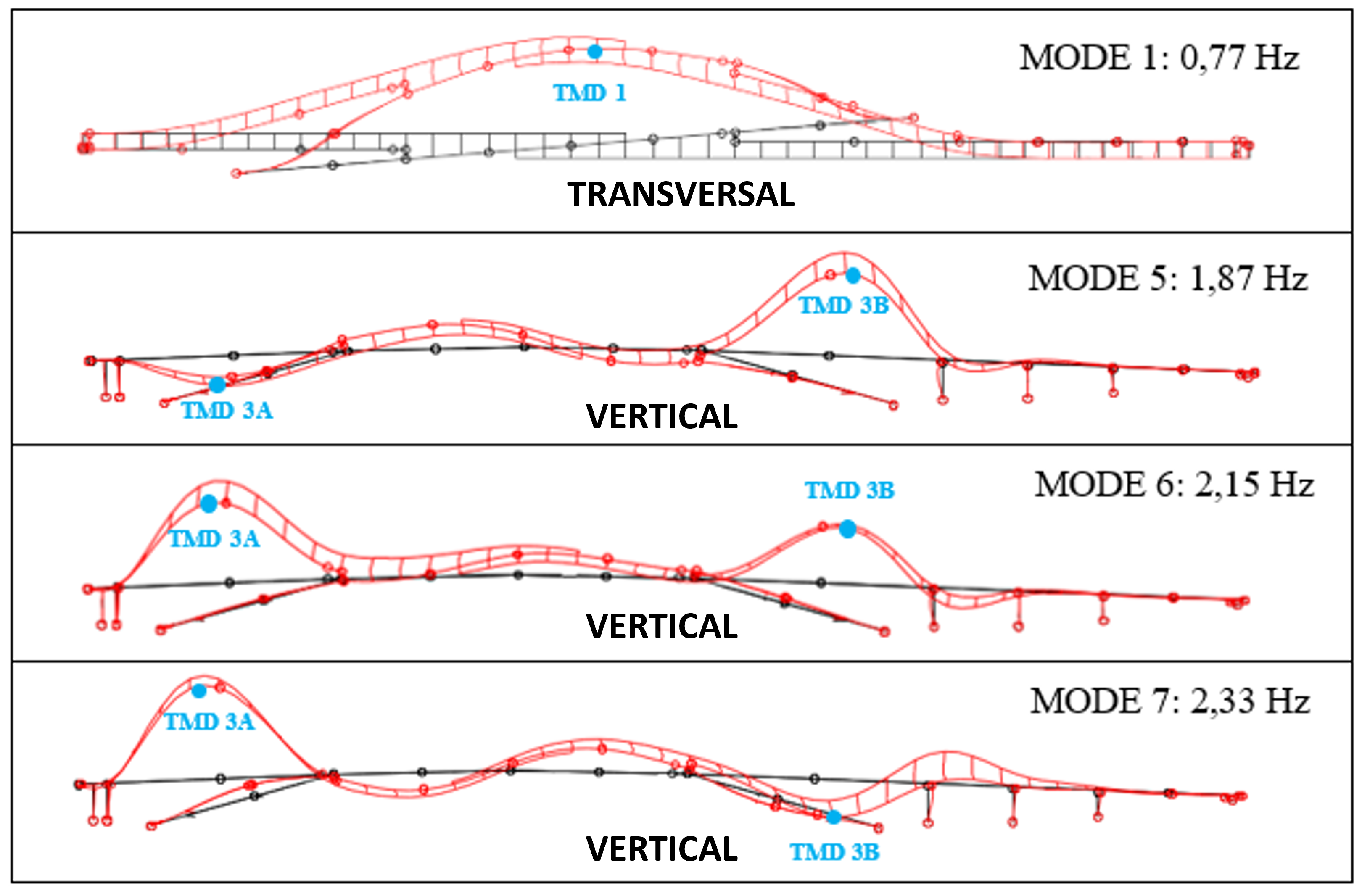
Contributions of the approach with modal coupling
Calculations incorporating modal coupling allow for a more accurate evaluation of accelerations. On “L’Enjambée,” this approach demonstrated the approximation of the classical method in estimating pedestrian comfort and helped optimize the number of dampers, validating the benefit of this integrated approach.
Conclusion
ntegrating modal coupling is becoming essential for structures where modes are close and multiple TMDs are used. It ensures more refined analyses and better sizing of damping devices.
Read the full article in English – IABSE Congress 2023 (PDF)