A structural dome serving urban comfort

Toots Metro Station 1 - greisch

Reconciling urban complexity with architectural ambition

Located in the heart of Brussels, Toots Thielemans station is part of the Metro 3 project, designed to structure the capital’s North–South axis. The densely built-up and tree-lined site imposed major constraints: maintaining surface traffic throughout construction, reintegrating large trees after completion, enhanced fire safety requirements, and high spatial quality for users.

A structural challenge: supporting the city while freeing up space

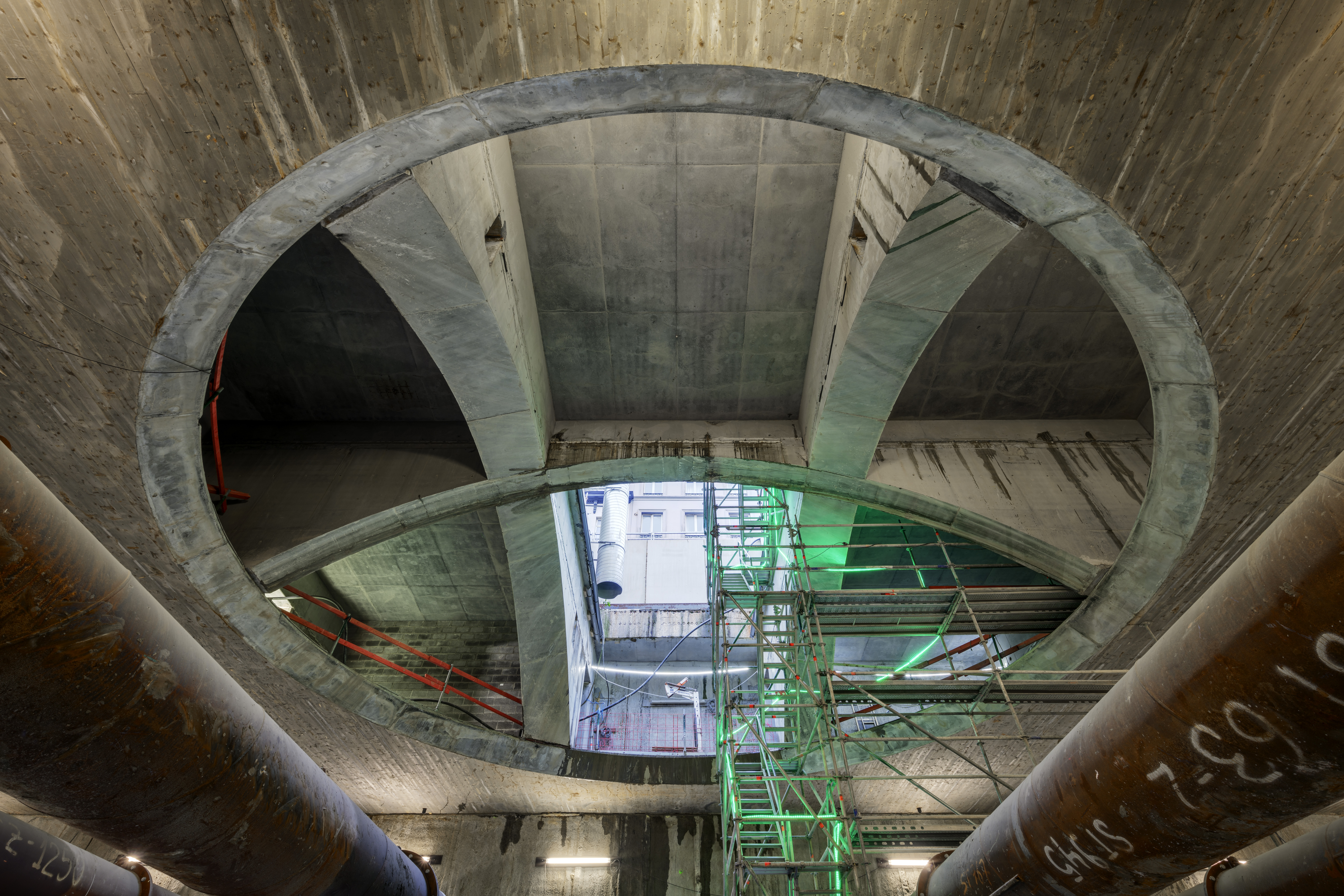
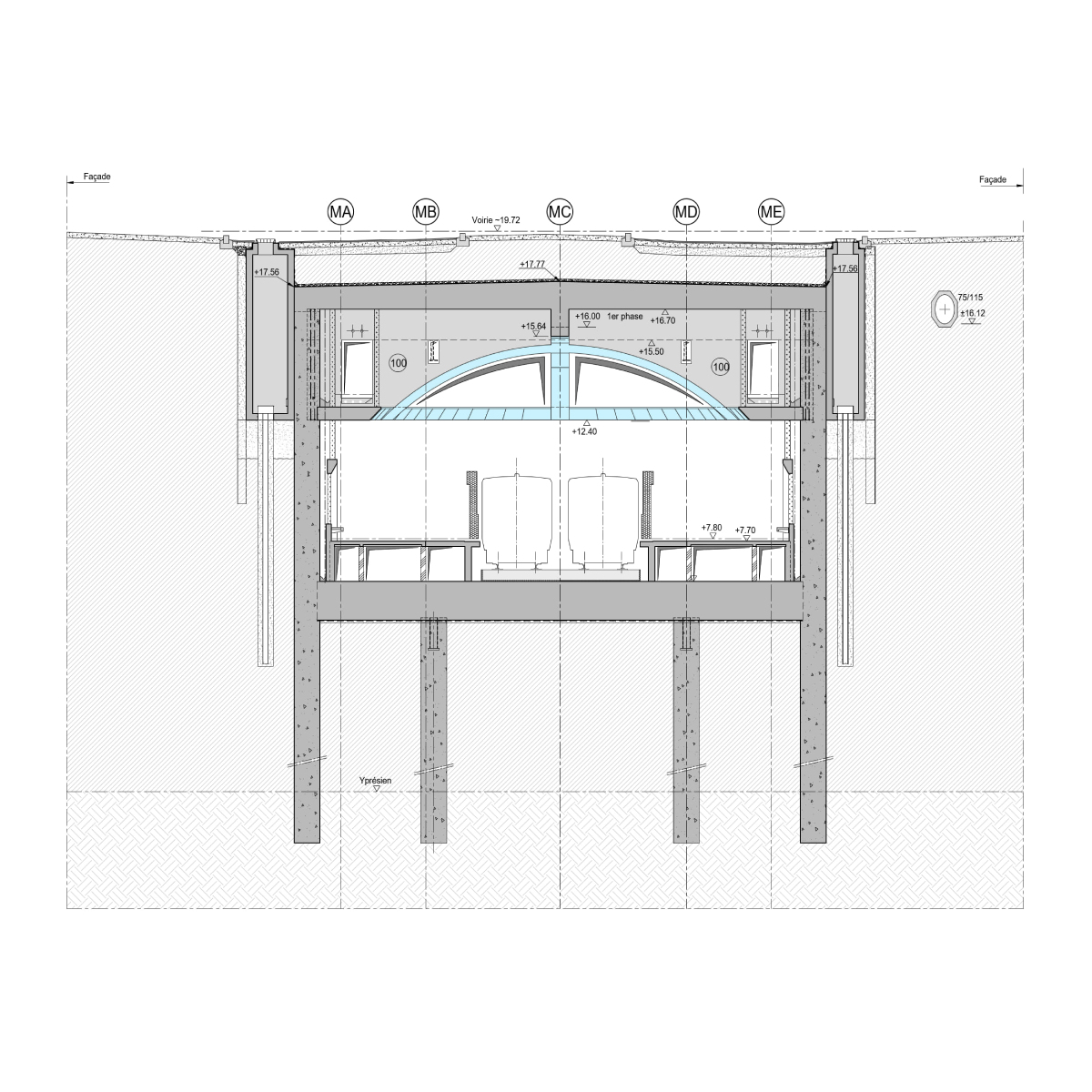
To accommodate trees and traffic loads, the station was built at significant depth, generating actions equivalent to a six-storey building over a 20-metre span. In response to this constraint, a dome solution made of concrete arches was selected, combining robustness and aesthetics.

An opening at the heart of an underground structure

The main architectural objective was to counter the oppressive feeling typical of underground spaces. By shaping the arches as if hollowed out by a sphere, a sense of openness and clarity was created. This formal gesture directly enhances passenger comfort while integrating technical functions, such as seating along the walls.

Form serving fire safety

The hollow shape of the arches acts as smoke traps in the event of a fire, keeping smoke away from passenger areas. This passive solution, combined with an integrated ventilation system, enables safe evacuation and effective emergency response.
Toots Metro Station 2 - greisch

Controlled execution, phase by phase

Construction followed a top-down method, allowing surface activity to be maintained. The arches, partially cast before full excavation, required temporary supports with carefully designed foundations. Once the structures were completed, the props were removed, freeing up the interior volume and activating the dome behaviour.

Modelling interaction: a multi-scale approach

Structural analysis combined 2D and 3D modelling to assess the complex interaction between arches, walls, soils and construction staging. By varying the stiffness of supports (depending on soil pressure or the presence of a raft slab), engineers were able to estimate load redistribution and refine reinforcement design.

Detail accuracy: integrating openings and connections

Technical openings in load-bearing elements required strut-and-tie modelling to redirect forces and ensure local stability. Horizontal thrusts between arches were balanced within the intermediate slab through an optimised reinforcement layout.

Site feedback: between anticipation and adaptation

Rebar assembly in the most congested zones was supported by specific 3D modelling. An incident related to the use of a dimpled membrane revealed bonding defects between concrete casting phases. A rehabilitation solution combining hydro-demolition, grout and epoxy injection was successfully implemented.

Conclusion: structurally bold, spatially calming

The choice of a dome structure proved optimal despite design and execution challenges. Far from being purely formal, this solution strikes a balance between strength, comfort and safety. Ultimately, users will benefit from a distinctive space—both a daily landmark and a discreet technical achievement.


Read the full article in English – IABSE Congress Ghent 2025 (PDF)

Feel free to reach us

Contact us