Targeted interventions on the strategic nodes of Fragnée and Kennedy
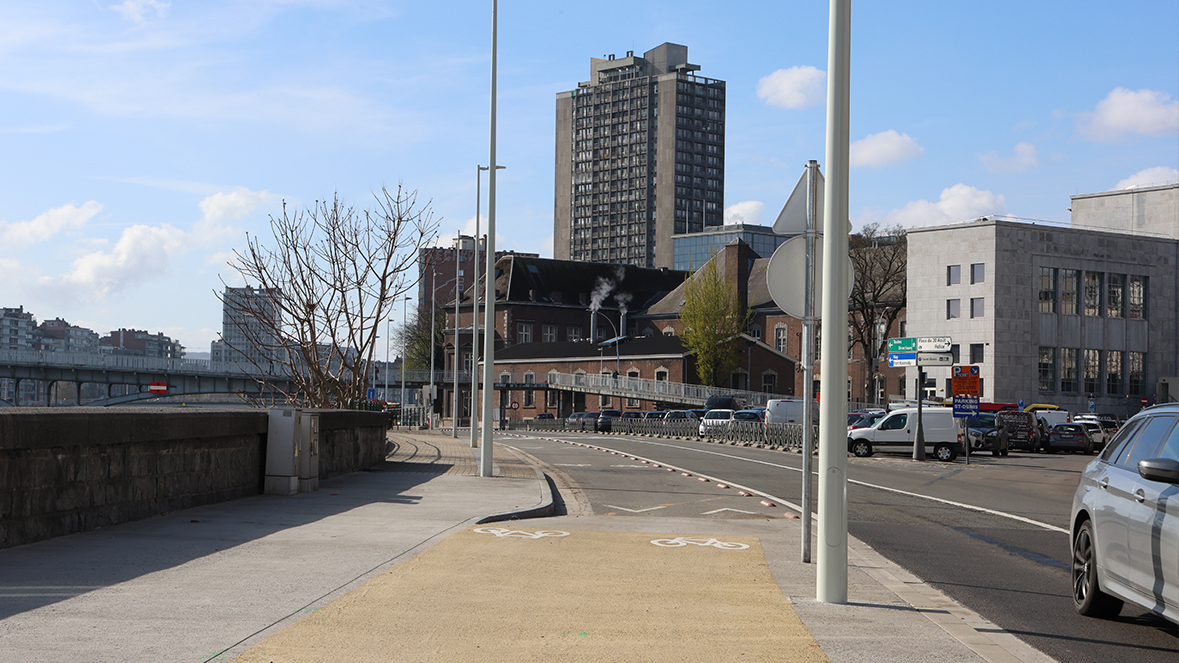
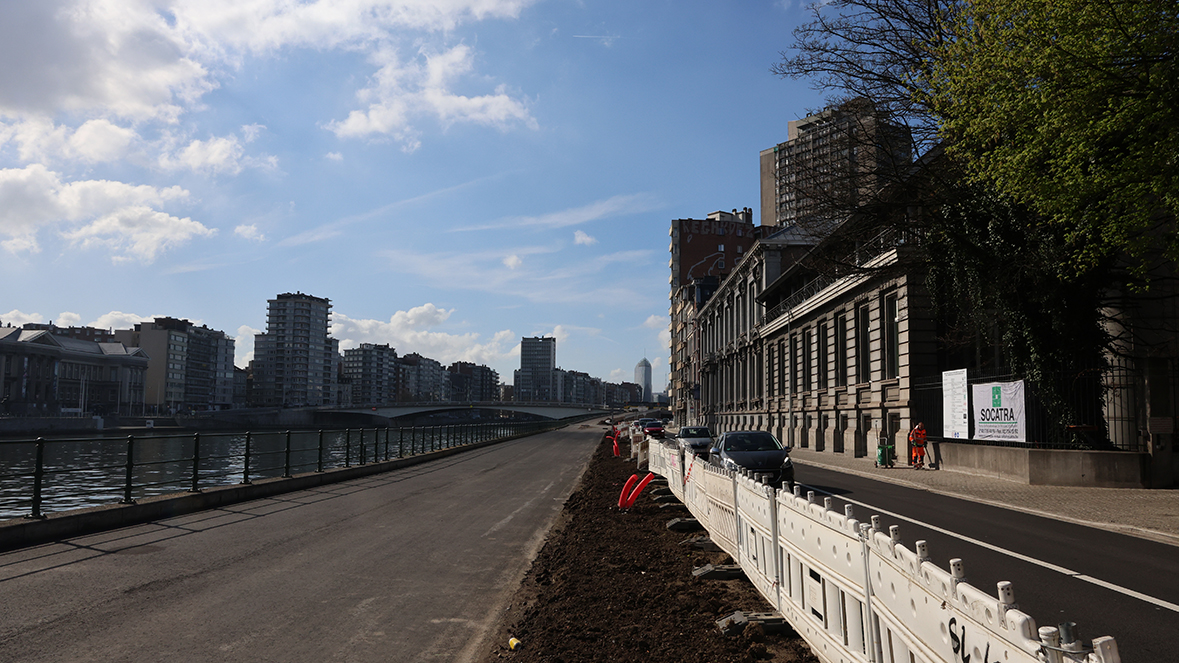
For the two sectors, totaling approximately 1.5 km in length, the interventions are in the form of classic linear interventions, i.e., across the entire width of the roadway continuously. The entire structure, including the pavement, foundation, and sub-foundation, is rebuilt. The goal is to widen the cyclopedestrian spaces and limit the lanes dedicated to cars. These spaces are mostly 4 meters wide for cycling and 2 meters for pedestrians. Where this configuration is not possible, the space is mixed, with a width of 4 meters.
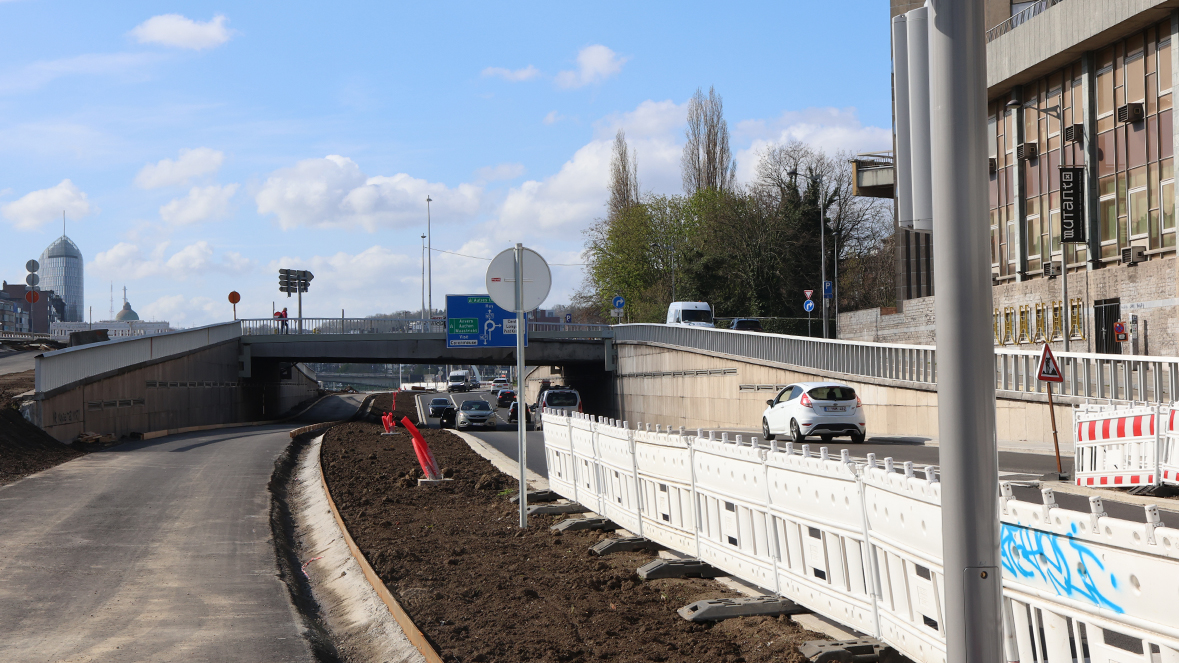
The nodes of Fragnée and Kennedy, however, are subject to more particular interventions. Under the Kennedy bridge, the throat is completely modified. To reduce the “tunnel” effect of this throat, the walls of the ramps are shortened, opening up the space. The new cycle path that passes under the bridge is raised above the road level for better comfort on the cycle route. This comfort is enhanced by the greening of the area to separate the modes.
For the pavement, concrete has been chosen. Durable, versatile, and requiring little maintenance, this material also reinforces the homogeneity of the project, as it was already present in the existing developments.