Bridge location: an underestimated driver in defining wind loads
A complex reality: wind does not blow the same way everywhere
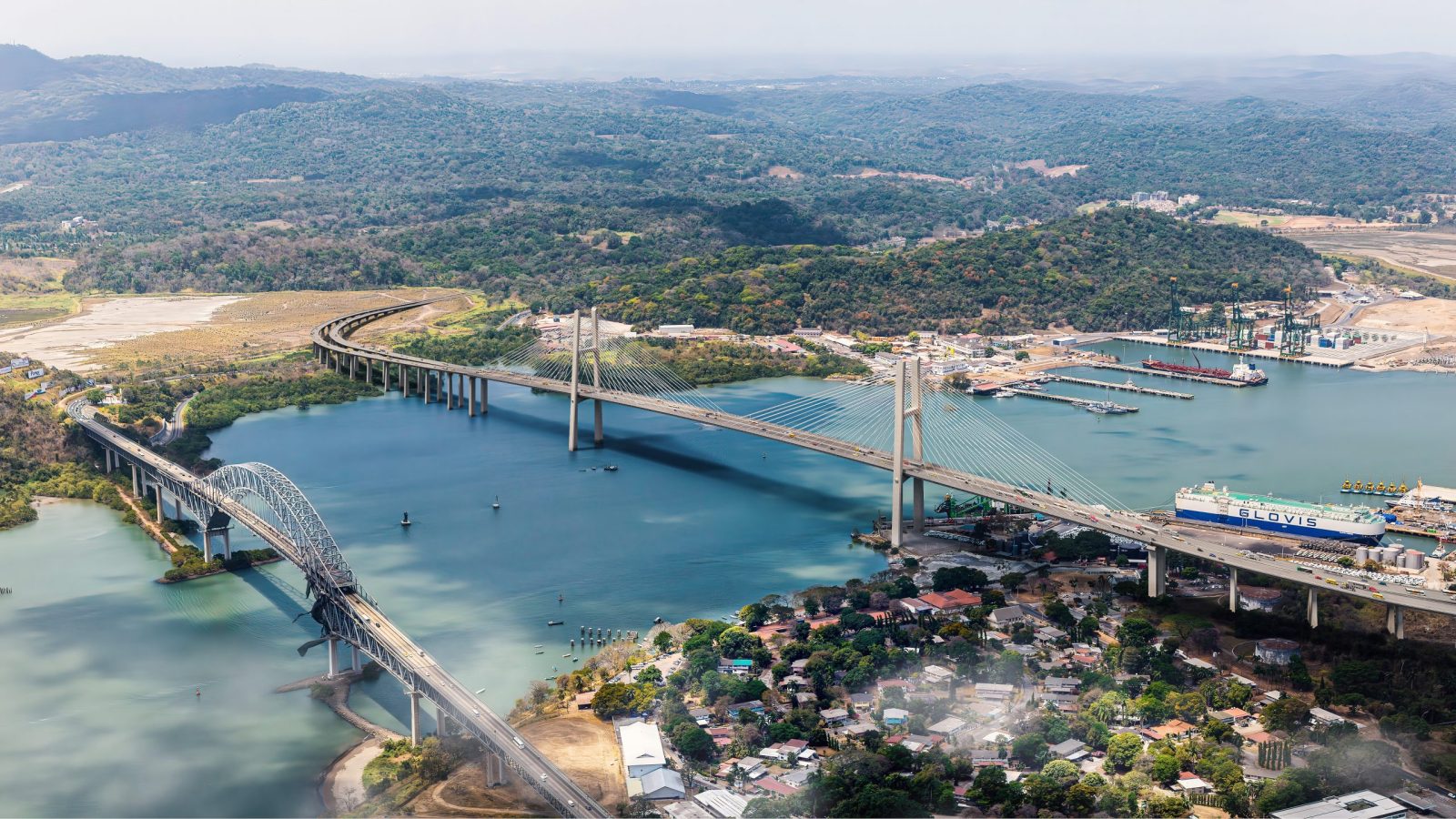
Long-span structures such as cable-stayed bridges are highly sensitive to wind effects. However, the way wind is modelled varies significantly from one region to another. This is highlighted by a study carried out by greisch on a bridge project located in Panama.
The site’s geographical configuration (latitude, atmospheric conditions, topography) and the selected design standards (Eurocode vs AASHTO) directly influence the internal forces within the structure. As a result, a reliable design cannot rely on a generic approach: it must be based on accurate local data.
Standards and assumptions: results with significant differences
Lessons learned from a project in Panama
By analysing the wind behaviour of a 965 m long cable-stayed bridge on Panama’s Pacific coast, greisch highlighted major discrepancies between several combinations of standards and input data:
- Return period: 700 years for AASHTO, 50 years for Eurocode
- Load factors: 1.0 for AASHTO, 1.5 for Eurocode
- Spectral modelling: von Karman vs Kaimal
- Turbulence integral length scales: from 258 m (USA) to 501 m (Panama)
Result: for the same structure, internal forces can vary by up to +55%, depending on the location and the assumptions adopted.
Why such differences? A largely geophysical phenomenon
The decisive influence of latitude
Latitude affects the Coriolis force and therefore the size of wind vortices (turbulence length scales). This parameter, still too often overlooked in early design phases, significantly modifies the spatial distribution of gusts along a long structure.
A striking example: in Panama, gusts may extend over more than 500 m, compared to around 300 m in Europe. This is a critical parameter for structures sensitive to buffeting.
Towards more collaborative engineering: the role of wind experts
Collaboration between structural engineers and aerodynamic specialists must start from the earliest project stages. Relying solely on standards is no longer sufficient: contextual adaptation is essential.
A proactive approach combining local expertise, accurate climatic data and a shared understanding of standards makes it possible to:
- Secure structures against complex dynamic loads
- Optimise dimensions (and therefore costs)
- Anticipate impacts during construction phases
Conclusion: integrating regional variability to build better
Each site has its own climatic signature that directly influences the stability of a structure under wind action. It is therefore crucial to integrate regional variability from the initial calculations. For international projects, this approach is a key driver of performance, safety and durability.
Read the full article in English – IABSE Congress Ghent 2025 (PDF)